
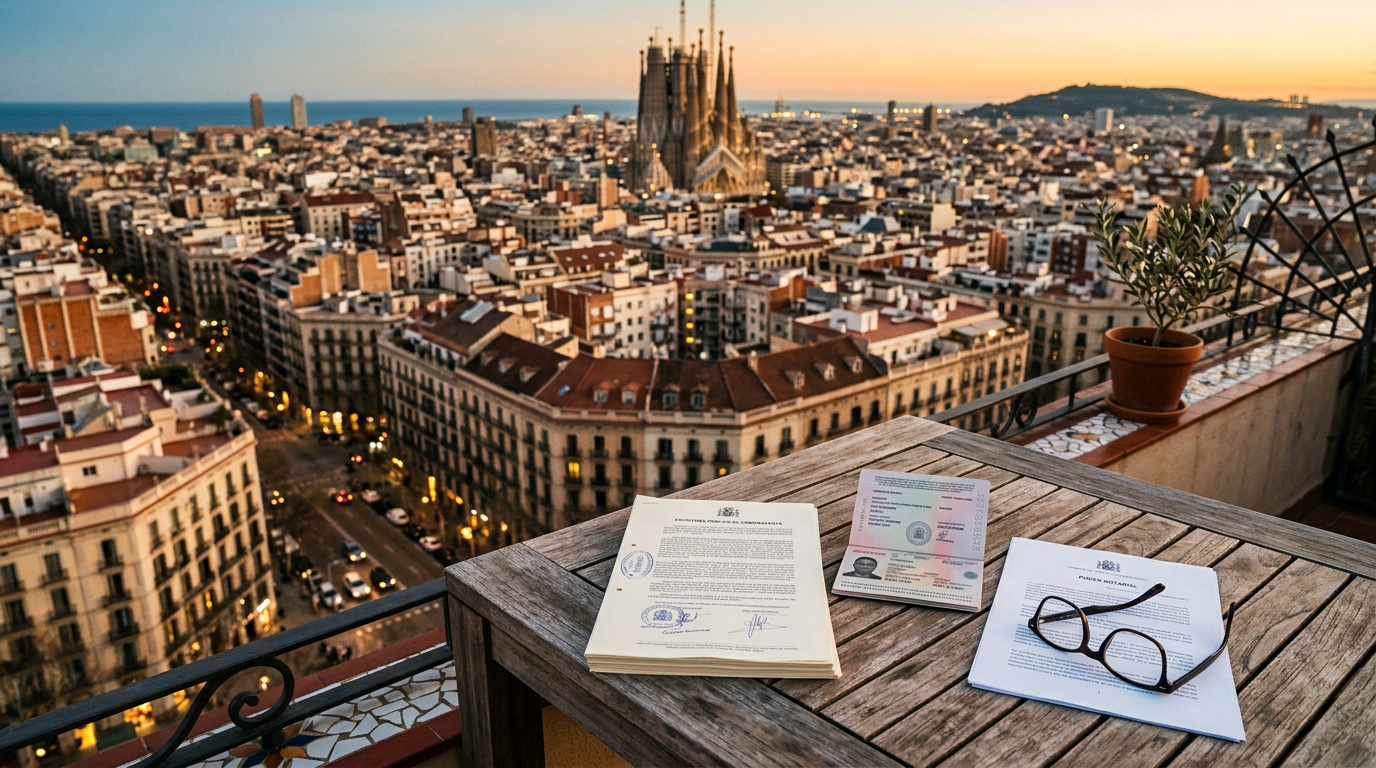
Buying a home in Barcelona while residing in another country is perfectly viable, but requires organizing the operation further in advance than an ordinary sale.
The buyer must obtain an identification number in Spain, prepare bank documentation, prove the origin of funds and decide whether to travel to sign or act through a representative. To this is added the legal review of the property: ownership, encumbrances, Catastro (Land Registry), urban planning situation, community of owners, ITE (Building Technical Inspection), cédula de habitabilidad (Habitancy Certificate) and deposit contract (arras).
The main risk is usually not the distance, but rather that the different procedures —consulate, bank, agency, notary and financing— proceed without common coordination. In this guide we explain how to buy a property in Barcelona from abroad and what you must prepare before paying any financial deposit.
Can a foreigner buy a property in Barcelona?
The acquisition of a home and the obtaining of legal residence in Spain are different matters. A foreign person can acquire a property without previously moving their habitual residence to Spain. However, they must have the necessary identification to formalize the operation and comply with their corresponding tax obligations.
The purchase of a home also does not currently grant, by itself, a general right of residence. Law 1/2025 left without content the articles that regulated visas and authorizations for new real estate investors (the well-known Golden Visa), maintaining only a transitional regime for previous applications and renewals of permits already granted. Therefore, if the buyer intends to live in Spain, they must separately study which authorization or residency regime applies to them.
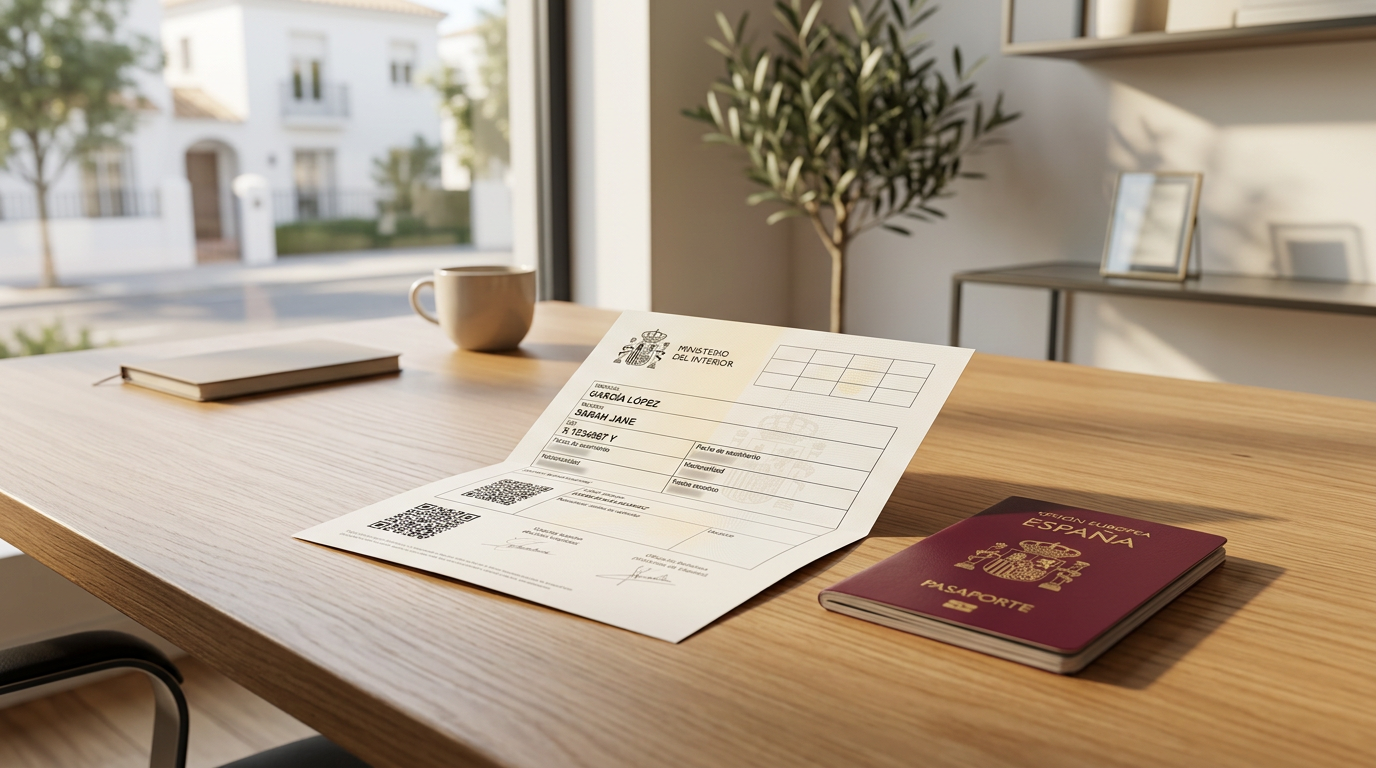
1. Obtain the NIE (Foreigner Identity Number)
The first mandatory procedure is obtaining the Número de Identidad de Extranjero, known as NIE.
The Spanish Ministry of the Interior defines it as a personal, unique and exclusive number that identifies foreign persons who maintain economic, professional or social interests in Spain. It must compulsorily appear in all documents and administrative actions related to the sale.
To apply for a non-resident NIE you must provide:
- Official form EX-15.
- Valid passport or identity document (and photocopy).
- Document justifying the economic, professional or social reason for the application (the intention to acquire a property is sufficient cause).
- Proof of payment of the assigned fee.
This document can be processed directly in Spain (before the General Directorate of Police), through an authorized representative in national territory, or at Spanish consular offices abroad.
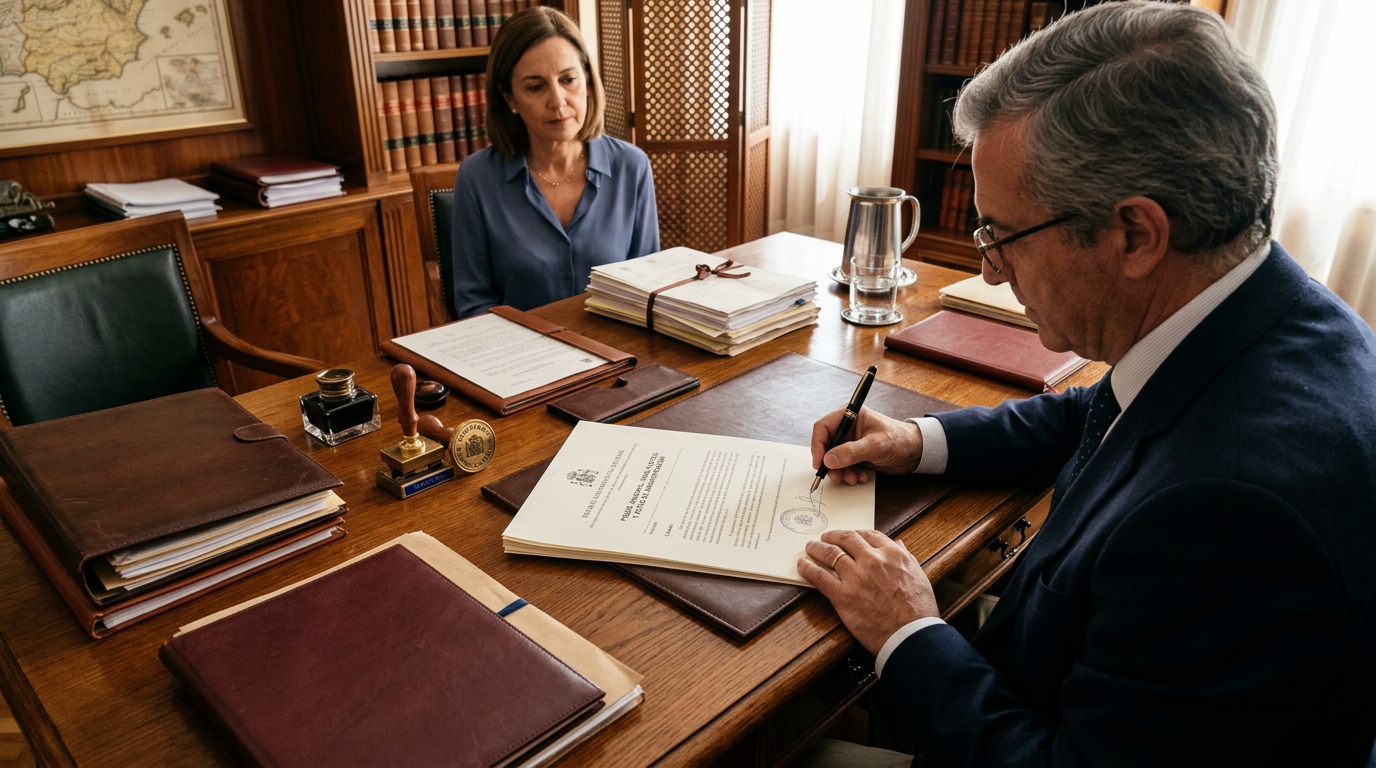
2. Decide whether you will buy personally or by power of attorney
The buyer does not need to travel to Barcelona for all phases of the operation. In fact, it is very common to grant a poder notarial (power of attorney) in favor of a professional or trusted person in Spain.
The Ministry of Foreign Affairs confirms that both Spanish and foreign citizens can grant powers of attorney before consular offices to authorize a representative to perform valid legal business in Spain. It is also possible to grant this power before a notary in your country of residence; however, in the latter case, the document must have the Hague Apostille (or diplomatic legalization) and an official sworn translation into Spanish or Catalan.
What powers should the power of attorney contain?
Using a generic template is not recommended. To ensure the success of the remote sale, the power of attorney should clearly specify powers to:
- Apply for the NIE.
- Open and manage bank accounts in Spain.
- Sign reservation and deposit contracts (arras).
- Appear before a notary to sign the deed of sale.
- Make transfers, tax payments and settlement of expenses.
- Contract home utilities and register the property in the Registry.
If you need financing, the power of attorney must expressly authorize the negotiation and signing of the mortgage loan. A basic purchase power is usually not sufficient to constitute a mortgage guarantee in the eyes of banking entities.
3. Prepare for the opening of a bank account
Having a Spanish bank account greatly facilitates the payment of purchase taxes, notary fees, utility contracts and future community fees.
The Bank of Spain points out that financial entities can request both EU and non-EU citizens their passport and NIE to open non-resident accounts, in addition to requiring economic documentation that proves their tax status in their country of origin. The compliance process (KYC) can delay the opening for several weeks, so we advise you to start this process in advance.
4. Prove the origin of funds
The justification of the money destined for the purchase is one of the aspects that causes the most delays and blockages in foreign transactions in Barcelona.
The receiving bank, the notary and legal advisors are subject to strict anti-money laundering policies. You must present documentation that justifies the traceability of the money consistently:
- Income tax returns and payslips in your country of residence.
- Sale deeds of other properties, inheritances or donations received.
- Bank statements showing where the money comes from and how it travels to Spain.
If the payment is made by a third party (for example, a direct relative), it is essential to document the legal cause (such as a loan or donation contract) and settle the corresponding tax to avoid severe tax penalties.
5. Due diligence and contracts: Avoiding risks from a distance
When buying a property from abroad, you run the risk of signing a reservation based solely on photographs or virtual tours.
Before making any disbursement or signing binding contracts, it is critical to perform a real estate due diligence. This legal audit should include:
- Obtaining a nota simple to review registry charges.
- Analysis of the cédula de habitabilidad and the Technical Building Inspection (ITE) mandatory in Catalonia.
- Checking debts with the community of owners and the City Council (IBI).
- Verification that cadastral data matches perfectly when comparing Registry and Catastro.
Once the legal status of the dwelling is validated, the documentation before signing arras will be negotiated. If you are applying for a mortgage, make sure to include safeguard clauses to protect the purchase against the denial of financing.
6. Signing of the deed, taxes and subsequent procedures
On the day of the signing, the representative or you will go to the notary in Barcelona to grant the public deed of sale. In this act, all documentation, payment methods will be verified and, if the buyer does not master the language, the presence of an interpreter will be required.
After signing, the period to pay the property purchase taxes in Barcelona (Property Transfer Tax/ITP on second-hand homes, currently at a general 10% in Catalonia, or IVA/VAT on new builds) will begin. Finally, the registration in the Property Registry, the change of utilities and the planning of periodic tax obligations for non-resident owners (such as IRNR - Non-Resident Income Tax) will take place.
Checklist for the international buyer
- Valid passport in correct format.
- Non-resident NIE processed.
- Legalized and translated power of attorney.
- Operational bank account in Spain.
- Documents of origin of funds prepared.
- Favorable due diligence informative report.
- Deposit contract (arras) with financing clause.
- Budget for taxes and expenses calculated (approx. 12% additional to the price).
Frequently asked questions about buying property in Barcelona as a foreigner
Do I need to live in Spain to buy a home?
No, it is not necessary to reside or have a residence permit in Spain to acquire a property. The sale and the immigration status are completely independent processes.
Can I buy a flat without physically traveling to Barcelona?
Yes, it is entirely possible. You can grant a sufficient power of attorney to a lawyer or trusted manager in Spain so that they sign all contracts and the deed for you.
Why does the bank in Spain request so much tax documentation?
Due to European anti-money laundering regulations, Spanish banks and notaries are obliged to verify the legal origin of funds before accepting an international transfer of capital.
Conclusion
Buying a home in Barcelona from abroad is an excellent investment, but success lies in a millimeter coordination between obtaining the NIE, preparing the powers of attorney, analyzing bank risks and the preventive legal audit of the property.
At INMODOCS we take care of securing the entire process: we draft your powers of attorney, analyze bank viability, execute the comprehensive legal due diligence of the property in Barcelona and accompany you until the delivery of keys and final registration so that you invest with absolute peace of mind from a distance.

Before signing the deposit
If you are considering buying in Barcelona, read the full guide: Buying a flat in Barcelona without surprises.