
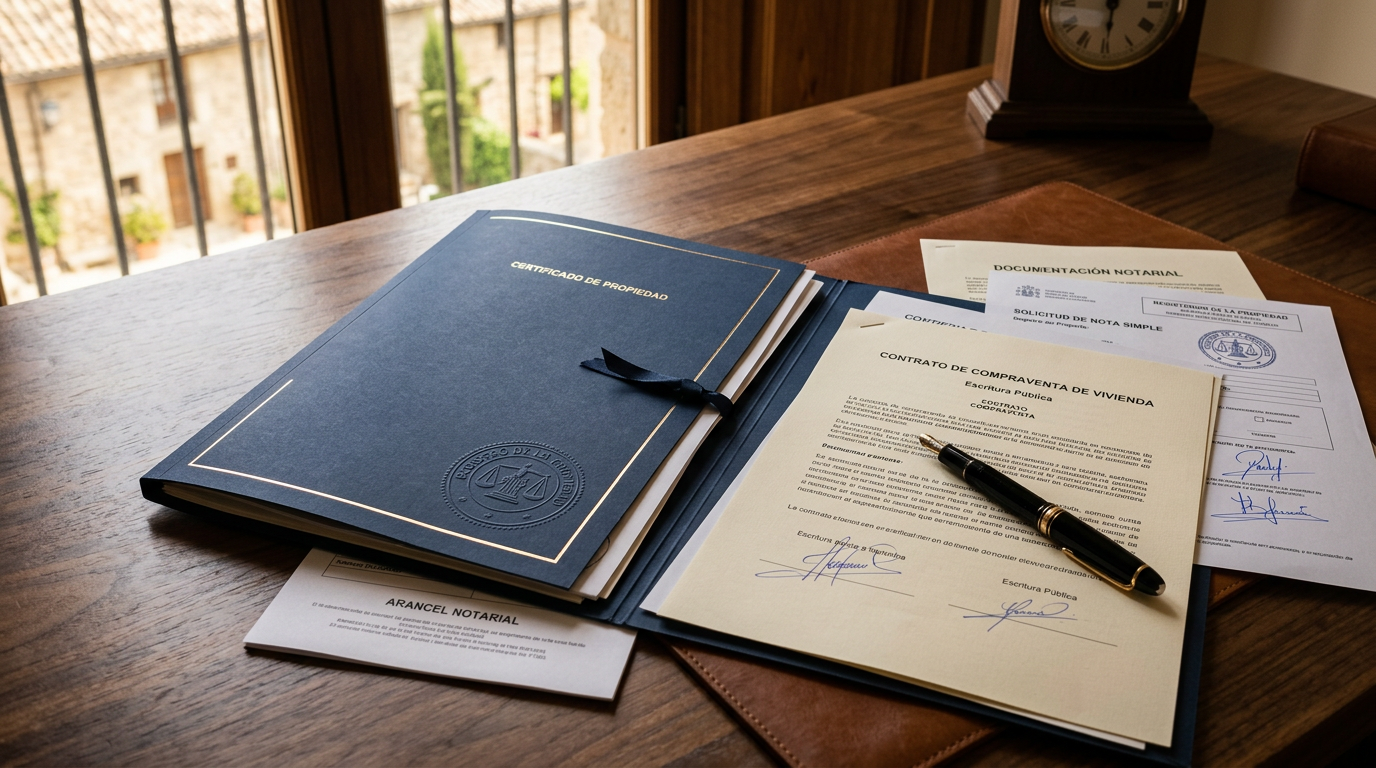
If you are thinking of acquiring a property in Catalonia and suspect or know that it was once classified as protected, it is essential that you proceed with caution. Do not make the mistake of assuming that a property is free-market simply because a long time has passed since its construction. Nor should you assume the opposite without checking: a deed from forty years ago may describe the property as Vivienda de Protección Oficial (VPO) when, under current legal reality, that regime has already expired.
To avoid last-minute surprises, administrative fines, or void earnest money contracts, you need to learn how to know if a property is VPO in a reliable manner. The key lies in locating the protection file and analyzing the regulations applicable to that specific case.
What does it mean for a property to remain subject to official protection?
While a property's protection regime remains in force, it is subject to significant legal limitations that restrict market freedom. These limitations on vivienda de protección oficial (VPO) in Catalonia mainly affect:
- The maximum sale or rental price: You cannot sell or rent it for any price you wish, but rather for the maximum value set by the Generalitat de Catalunya. In fact, before closing any deal, it is mandatory to calculate the maximum price of a VPO to avoid committing a serious offense.
- The buyer's requirements: The purchaser cannot be just anyone; they must be registered in the Register of Applicants for officially protected housing (Registro de Solicitantes de Vivienda con Protección Oficial) and meet certain income limits.
- Intended use of the property: It must be used obligatorily as a primary and permanent residence. It cannot be used as a second home or left vacant.
- Right of first refusal (derecho de tanteo y retracto): The public administration reserves the preemptive right to acquire the property at the maximum legal price. It is essential to verify the Generalitat's right of first refusal before proceeding with the transfer.
The key document: the definitive VPO classification
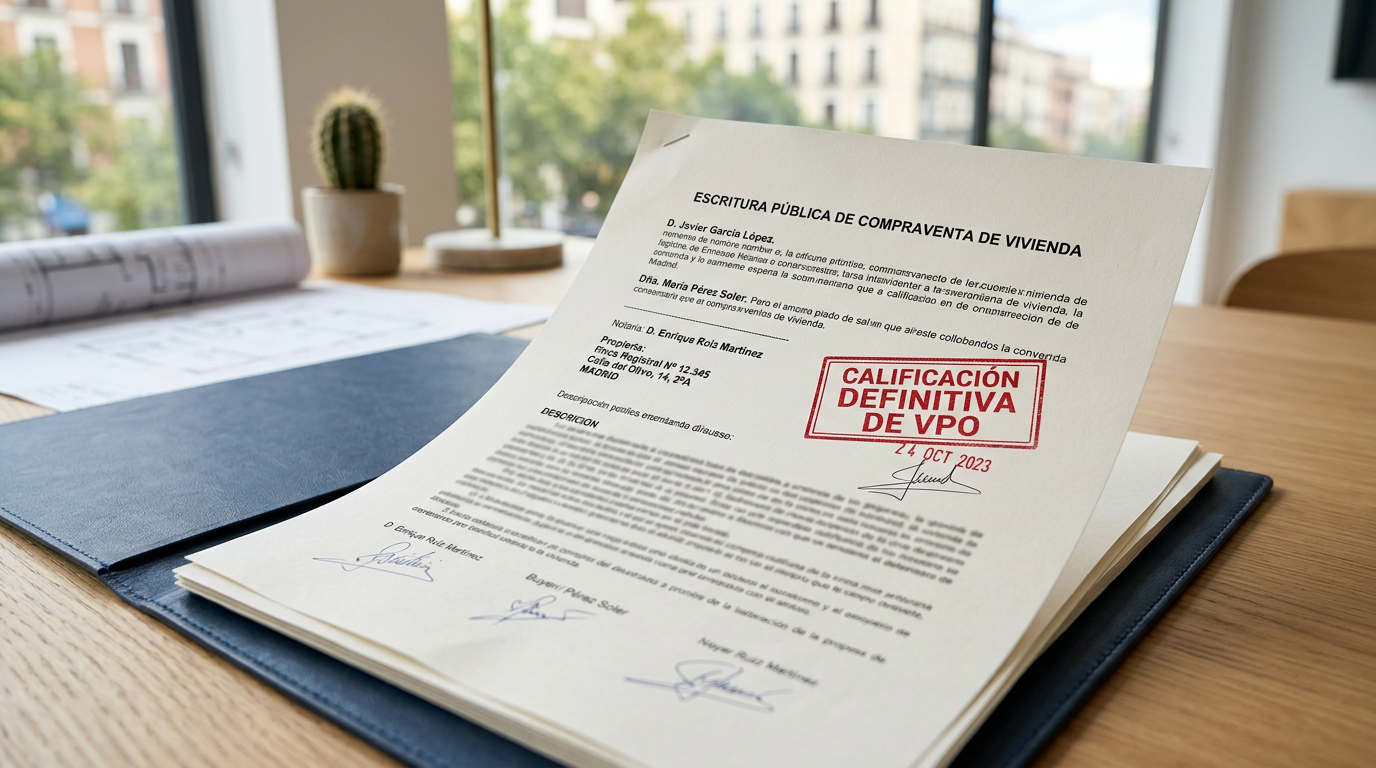
To reveal the real status of the property, the most important document you must obtain is the resolution of definitive VPO classification (calificación definitiva). This administrative document concludes the protected development process and details the specific conditions of the property.
The following crucial information is included in this official document:
- The VPO file number (número de expediente) assigned to the development.
- The exact date of the definitive classification (which marks the start of the calculation of the protection period).
- The housing protection regime under which it was registered (for example, general, special, or concerted regime, etc.).
- The applicable legal regulations of the time.
- The exact duration of the protection period.
- The properties, parking spaces, and storage rooms linked to said regime.
The Generalitat itself points out that, in the case of older developments, the exact duration of the protection is whatever is expressly stated in this definitive classification resolution. Generally speaking, this document is usually attached to the original purchase deed of the property. If you are going to buy a second-hand VPO, request this document from the seller as soon as possible.
Where to locate the file number of the property?
If the current owner does not have the final qualification resolution (resolución de calificación definitiva), do not worry: to initiate any official inquiry or declassification process, the most important piece of information you need is the protection file number. This code usually consists of letters and numbers.
You can find this identifier code in the following sources:
- The original property deed: In the first pages of the title deed (escritura de propiedad) or in the clauses describing the charges and the nature of the property.
- The nota simple from the Land Registry: When reviewing the nota simple, it is common to find a marginal note indicating that the property is subject to official protection, pointing out the qualification file number.
- In the Catastro itself: Although the Catastro (Cadastral Registry) is not always infallible regarding administrative charges, it sometimes reflects the file reference.
How long does VPO protection last in Catalonia?
There is a widespread false belief that all VPO (vivienda de protección oficial) in Catalonia are automatically declassified after 30 years. However, the duration of VPO in Catalonia varies greatly depending on the year of development, the type of land, and the subsidies received.
Catalan regulations mainly distinguish the following current scenarios:
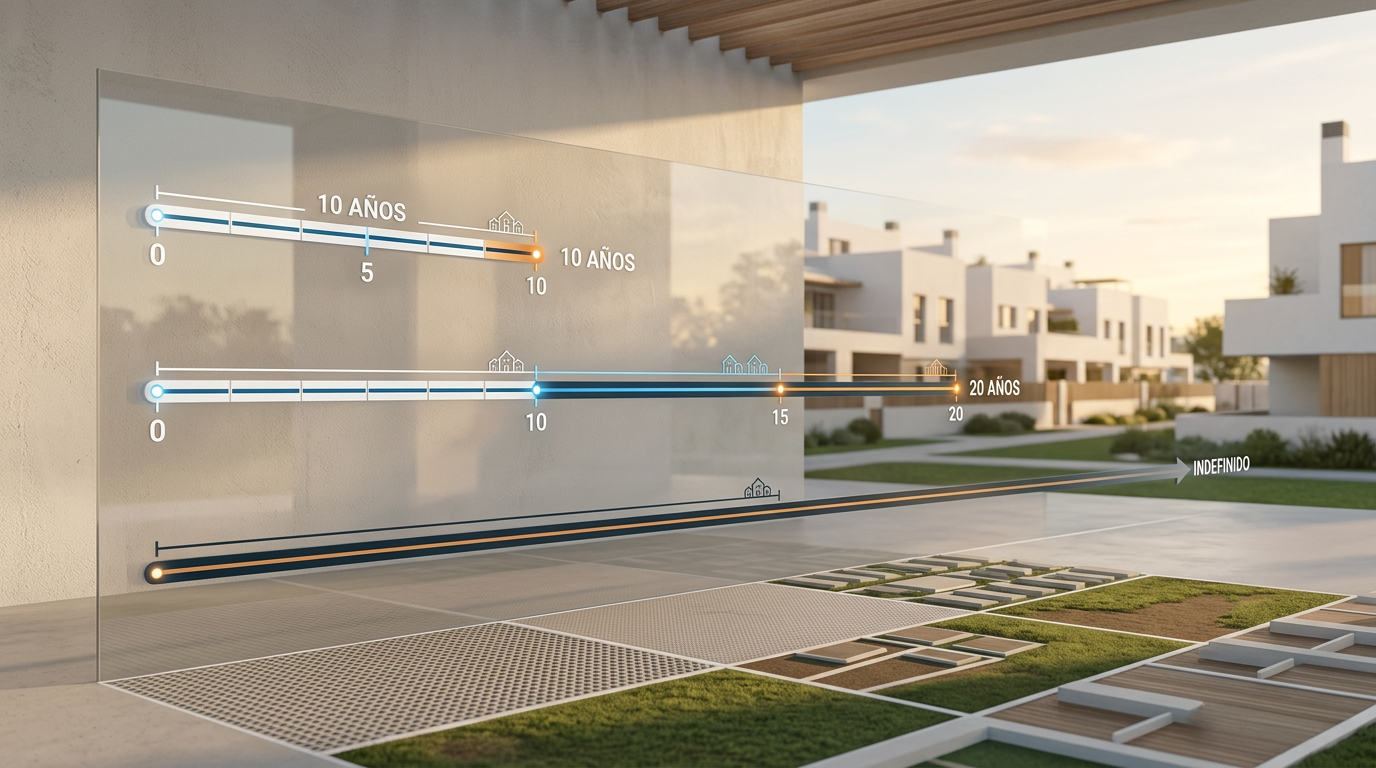
- VPO on land reserved for protected housing: If the municipal urban planning designated that land specifically for protected housing, or if it is part of a public land heritage, the protection is permanent. In these cases, the housing will never automatically enter the free market.
- VPO on non-reserved land without public subsidies: If the development was built on free land, does not belong to a public heritage, and did not receive construction subsidies, the protection is usually limited to 10 years in municipalities with strong housing demand (such as Barcelona and its metropolitan area) or 5 years in the remaining municipalities.
- Housing that received public subsidies: If the developer or the original buyers benefited from qualified loans or direct subsidies, the protection will last for the exact duration specified in the final qualification resolution or the applicable subsidy decrees.
- Effect of stressed areas (2026 Regulations): A highly impactful legal change establishes that if a protected housing unit is located in a municipality declared as a stressed residential market area (zona de mercado residencial tensionado), its qualification will mandatorily remain in force for the duration of said declaration. This directly affects properties in Barcelona and metropolitan areas that were close to their expiration date.
How to obtain official information from the Agencia de la Vivienda de Cataluña?
To clear up any doubts with total legal certainty, the ideal path is not to make guesses, but to make a formal inquiry with the administration. The Agencia de la Vivienda de Cataluña has a specific procedure called "Información sobre una vivienda protegida", available through the Tràmits portal of the Generalitat de Catalunya.
This procedure can be requested by both the current owner and any natural or legal person (for example, an interested buyer) who proves a legitimate interest. To complete it, you will need to provide the VPO (officially protected housing) file number and, preferably, an updated copia simple (simple registry copy).
The formal response issued by the Generalitat will detail:
- Whether the property is still protected or if it is already free-market.
- The regulations governing it and their expiry date.
- The current maximum sale and rental price.
- Whether there is an obligation to obtain a contract visa or sale authorization.
- Whether the administration plans to exercise its rights of first refusal and pre-emption (tanteo y retracto).
Is it possible to voluntarily declassify a VPO in Catalonia?
Many sellers resort to the argument: "If we find out it is still a VPO, we will apply for voluntary declassification by repaying the subsidies received and that's it". However, to know if a VPO is declassified or remains under the control of the Generalitat, you must understand that voluntarily declassifying a VPO in Catalonia is not so simple under the current legal framework.
According to the Catalan Right to Housing Act (Ley 18/2007 del derecho a la vivienda de Cataluña), protected housing cannot be declassified at the request of the owners during the protection period. Declassification can only occur exceptionally at the initiative of the public administration itself due to justified public interest reasons, and provided that the land is not reserved for that protected use by urban planning. Therefore, do not trust promises of express declassification before signing.
Common mistakes when buying an old VPO in Catalonia
- Believing that the age of the building equals its declassification: As we have seen, the age of the property helps as a guide, but protected land or regulations on stressed zones can extend the protection of an old VPO in Catalonia indefinitely.
- Relying solely on Catastro information: The Catastro (Cadastre) has purely fiscal purposes; to know the real legal status of a VPO, you must consult the Registro de la Propiedad (Property Registry) and the Agencia de la Vivienda (Housing Agency).
- Signing a conventional earnest money contract without checks: Agreeing on a free-market price and paying a deposit without first confirming whether the property is still subject to maximum price limits is extremely dangerous. If it is later discovered that it is still protected, the sale contract could be void and the seller could face severe penalties.
- Failing to verify the requirements for the buyer: If the property is still a VPO, the buyer must meet the income thresholds and must not own another property. Signing an earnest money agreement (arras) without meeting these requirements dooms the transaction to failure.
What to check and how to draft the earnest money agreement safely
If you are interested in a property that you suspect is or was a VPO, the golden rule is to conduct a legal review of the property thoroughly before transferring a single euro. Make sure to gather and analyze the following documentation before signing the earnest money agreement:
- Updated nota simple (land registry certificate) to identify potential marginal notes regarding VPO (officially protected housing).
- Original resolución de calificación definitiva (final official protection classification).
- Official maximum selling price certificate issued by the Agencia de la Vivienda de Cataluña.
- Registration of the buyer in the corresponding registry, if applicable.
In addition, when drafting the earnest money contract (contrato de arras), it is essential to include safeguard clauses. For example, expressly conditioning the validity of the contract and the sale on the property being legally free of official protection or, failing that, on the administration granting the corresponding transfer authorization at the agreed price and conditions without exercising its right of first refusal (derecho de tanteo).
Frequently Asked Questions (FAQ)
Does a VPO automatically cease to be so after 30 years?
Not necessarily. Although many old regimes provided for a duration of 30 years, there are developments with permanent protection because they are built on land specifically classified for VPO, or whose protection has been extended due to recent regulations in stressed residential areas of Catalonia.
Does the nota simple clearly indicate whether a property is a VPO?
The nota simple usually includes a marginal note detailing that the property is subject to the protection regime and the file number. However, since registries are not always automatically updated after the expiration of the protection, it is essential to cross-reference this data with the calificación definitiva (definitive qualification) or through a formal inquiry to the administration.
Can I request information from the Generalitat about a VPO I want to buy?
Yes. The official information procedure for protected housing of the Agencia de la Vivienda de Cataluña can be carried out by anyone who proves a legitimate interest in the purchase, providing the identifying data of the file and the property.
Conclusion
To know for sure when a property ceases to be a VPO, it is not enough to make estimates based on its year of construction. It is mandatory to locate the development's file number, obtain the calificación definitiva, and validate the urban planning status of the land and the residential tension status of the area.
At INMODOCS we are experts in the legal analysis of all types of properties. We carry out a rigorous preventive analysis of the housing documentation to ensure you buy with full legal guarantees, free of hidden administrative encumbrances, and in a completely secure way. Do not risk your investment!

Before signing the deposit
If you are considering buying in Barcelona, read the full guide: Buying a flat in Barcelona without surprises.