
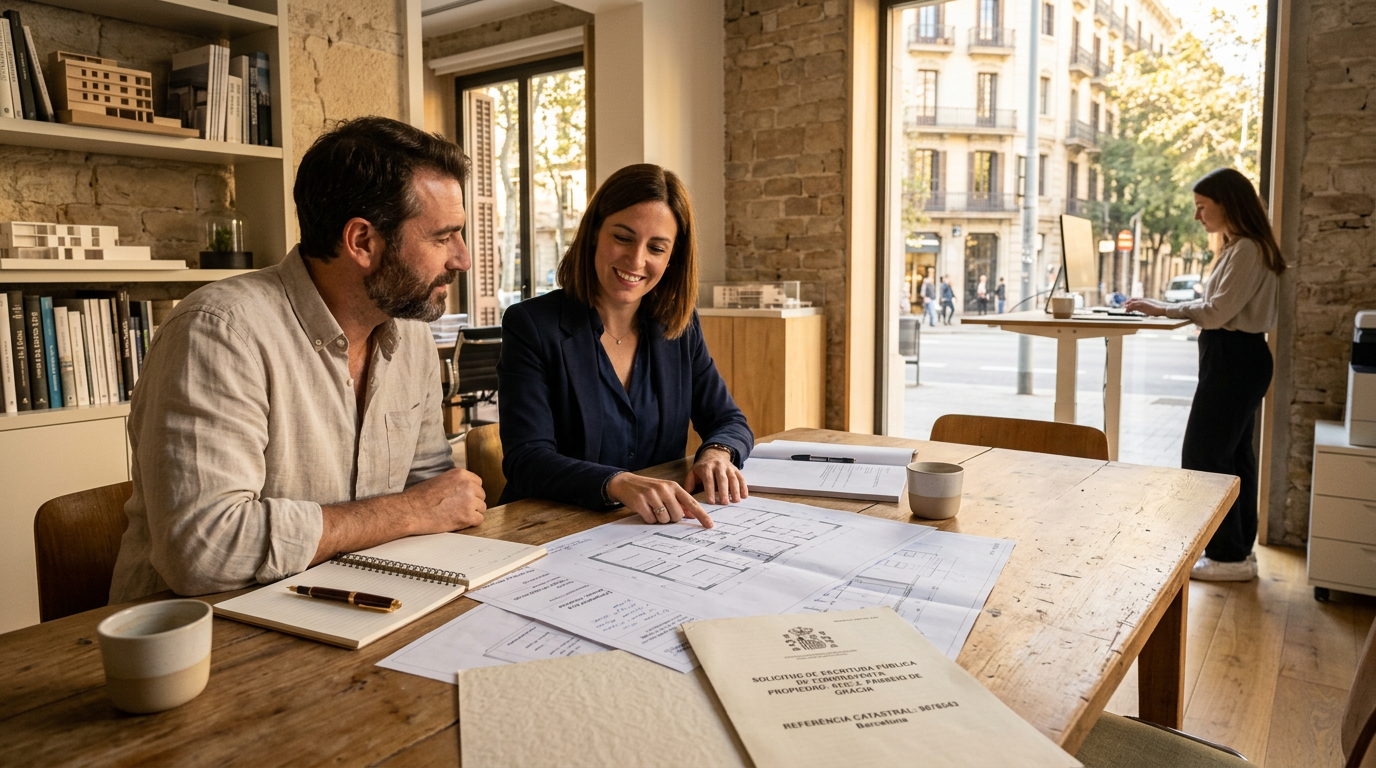
You have found a property that interests you, but the seller does not provide the 'cédula de habitabilidad'. Perhaps they claim it is expired, that it can be easily renewed, or that it is not necessary because the water and electricity supplies are already active. It is also common for them to propose signing the 'contrato de arras' (deposit agreement) and committing to obtain it just before formalizing the public deed before a notary.
These situations must be analyzed with extreme caution. The lack of this document does not always mean it is impossible to buy the property, but it is usually a red flag. It can indicate anything from a simple administrative delay to more serious problems: that the property does not meet basic technical conditions, the existence of illegal renovation works, or that its residential use presents serious urban planning discrepancies.
Before committing to buying a property without a 'cédula de habitabilidad', it is crucial that you understand exactly what this document is, what real risks you are assuming, and what preventive checks you should perform.
What is the 'cédula de habitabilidad' and what is it for?
The 'cédula de habitabilidad' (habitability certificate) is the regional administrative document that certifies that a property meets the minimum technical and sanitary conditions required by regulations to be used for human residence.
In Catalonia, the regulation under the Ley 18/2007 del derecho a la vivienda and Decreto 141/2012 sobre condiciones mínimas de habitabilidad establishes that this document is mandatory for:
- Transferring a home through sale, rental, or transfer of use.
- Contracting and activating services for water, electricity, gas, and telecommunications.
- Formally accrediting that the property meets the necessary sanitary and safety conditions.
There are three types of certificates depending on the age of the property:
- First occupation: For new-build homes (validity of 25 years).
- First occupation for renovation: For properties resulting from a major renovation, horizontal division, or change of use (validity of 15 years).
- Second occupation: For used or pre-existing homes that are transferred again (validity of 15 years).
An expired certificate does not automatically mean the flat is uninhabitable, but it does require hiring a competent technician (architect or surveyor) to carry out a habitability certificate and process its renewal before the Agencia de la Vivienda de Cataluña.
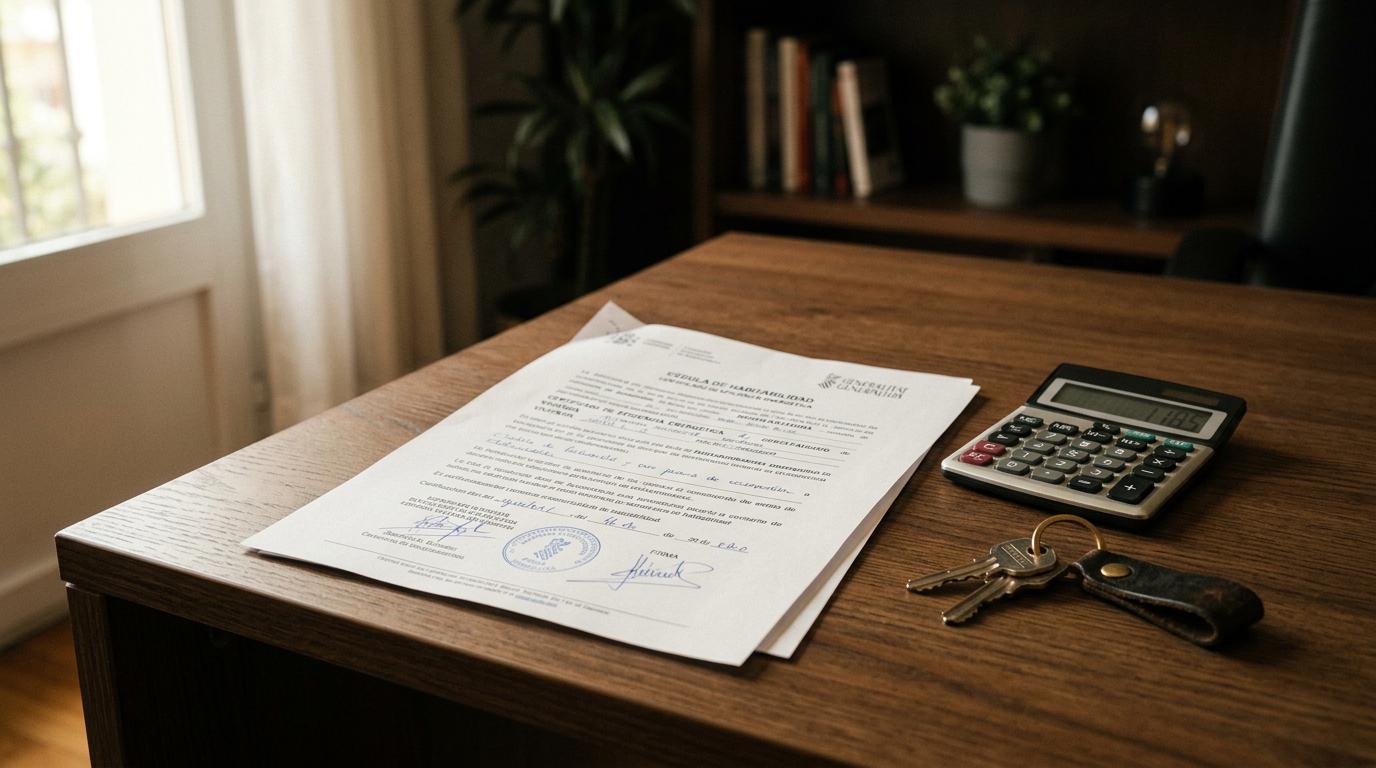
Can a property be sold without a 'cédula de habitabilidad'?
The general rule of Catalan regulations requires the seller to deliver a valid certificate of habitability at the time of signing the deed. However, the law contemplates certain very specific exceptions in which the buyer can expressly exempt the seller from this obligation:
- Future renovation or demolition: When the buyer acquires the property with the commitment to fully renovate it or demolish it. In the case of renovation, a report issued by a registered technician must be provided confirming that, after the works, the property will be able to meet the conditions to obtain the certificate.
- Commercial use or other uses: When the property will no longer be used as the buyer's home.
- Express exemption due to temporary physical impossibility: In certain cases where the buyer agrees to process it after the purchase because it is in the process of rectifying deficiencies, provided that the parties explicitly agree to it and it is documentarily justified.
It is not enough to put a generic clause in the contract saying that the buyer "waives" the certificate. If the exemption does not fit the cases of the law, the notary could oppose authorizing the purchase-sale deed.
💡 Are you being proposed to buy a property without a habitability certificate? We check if the document can be obtained, what works would be technically necessary, and we draft the ideal clauses in your contract to protect your money. 👉 Review the property and its legality
The 7 major risks of buying a home without a 'cédula'
Acquiring a property that does not have this valid document drastically increases the uncertainty of the transaction. Below, we list the main risks you are exposed to if you decide to sign without taking precautions.
1. The property might not meet minimum conditions
The most basic risk is that the home suffers from irreplaceable habitability deficiencies. Regulations demand very strict minimums regarding ceiling height, area per room, window dimensions for ventilation and natural lighting, or smoke vents in the kitchen. If you buy a basement or a renovated commercial premises that does not meet these guidelines, the Administration will definitively deny the second occupation certificate.
2. Need for very costly adaptation works
If the inspecting technician finds technical deficiencies (such as lack of insulation, serious humidity problems, obsolete electrical installations, or stairs out of code), obtaining the certificate will be conditional on the execution of works. These actions can cost thousands of euros that you did not anticipate in your initial budget, in addition to delaying your entry into the property.
3. Difficulties or impossibility to contract utilities
Water companies (such as Aigües de Barcelona), electricity, and gas companies are required by law to request the valid habitability certificate to process a new supply connection. If the flat has had its services disconnected, you will not be able to have essential supplies until you resolve the administrative problem.
4. Unsurmountable obstacles to obtaining a mortgage
The vast majority of banking entities in Spain require the certificate of habitability as part of the documentation before signing the deposit agreement and processing the mortgage. Appraisers will reflect in their technical report that the property lacks this document, which usually halts the granting of the loan or drastically reduces the appraisal value, by commercially classifying it as a premises or another non-residential typology.
5. Concealment of a serious urban planning legality problem
This is, potentially, the risk with the greatest economic impact. Many commercial premises, studios, or offices are sold disguised as homes ("loft without a cédula"). It is imperative to compare the Registry, Cadastre, and physical reality through an exhaustive urban planning check. It may happen that municipal planning strictly prohibits residential use on that plot or that the maximum density of homes allowed in the building has been exceeded, making the change of use totally illegal.
6. Future complications for selling or renting
If you decide to take the risk and buy the property without a certificate thinking of "fixing it later", you should know that, if you do not succeed, the day you decide to sell the property you will face the same market exit limitations. Furthermore, it is completely illegal to sign a lease agreement for a property intended for housing if it lacks a valid habitability certificate, exposing you to high administrative fines.
7. Excessive increase over the real purchase cost
Although the price of the property may seem like an excellent opportunity, you must add the total of hidden additional costs:
- Architect fees for the technical visa.
- Town hall and regional government fees.
- Budget for mandatory renovations to comply with Decreto 141/2012.
- Financial surcharge if the bank penalizes the loan conditions.
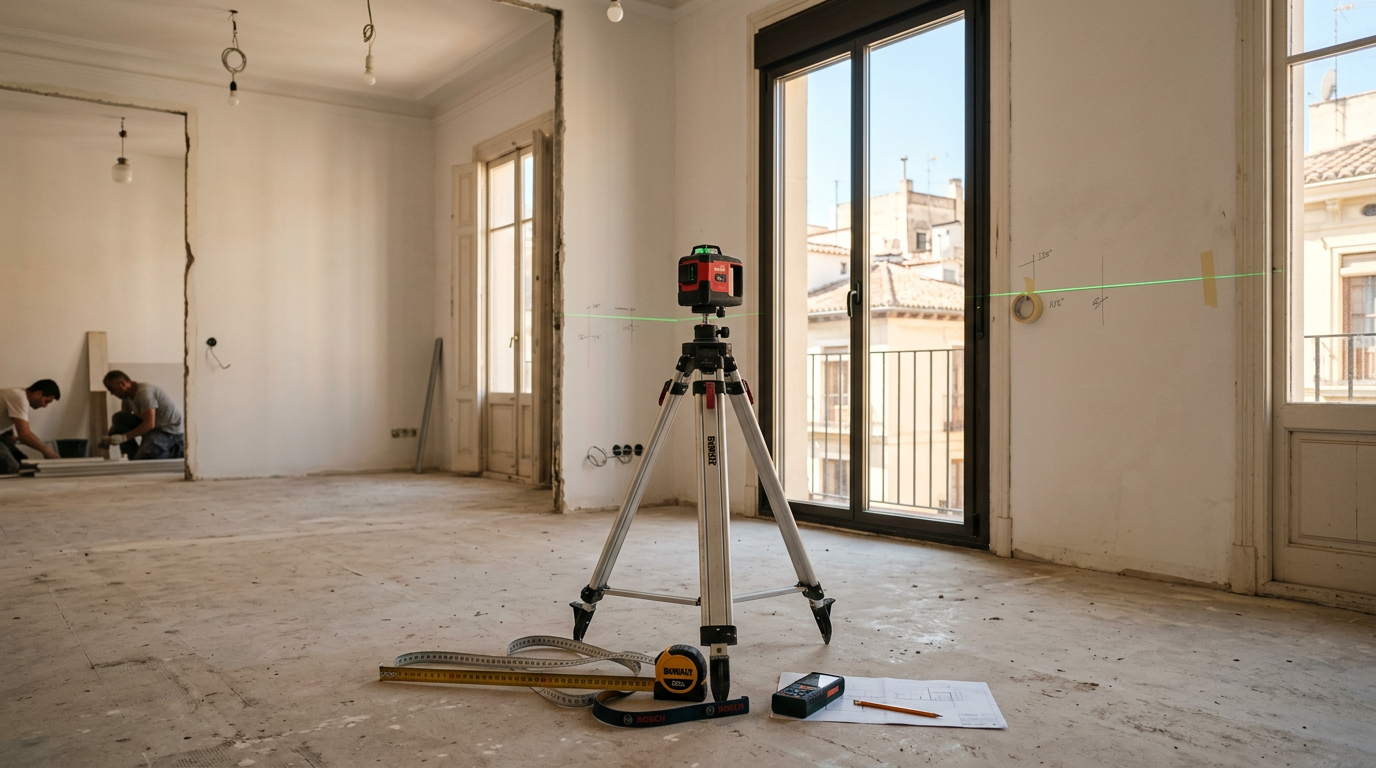
How to check if a property has a valid 'cédula de habitabilidad'
Do not rely solely on the words of the seller or the real estate agent. As a proactive buyer, you must perform the following verifications:
- Official online consultation: In the case of Catalonia, you can go to the Buscador de cédulas vigentes by entering the exact address or the cadastral reference.
- Demand the original documentation: Request the seller for a copy of the last certificate the property had, even if it is expired. This will confirm that, at least historically, the property has had a residential use recognized by the Generalitat.
- Commission a preventive technical analysis: Before signing any payment commitment, it is advisable to perform a real estate due diligence. A specialized architect or lawyer will objectively analyze if the property meets the required qualities so that the renewal is not denied.
What clauses to demand in the deposit agreement (contrato de arras)?
If you decide to proceed with the purchase process despite not having the certificate in order, it is fundamental to protect the delivery of money in the deposit agreement. You must demand that the 'contrato de arras' contains specific clauses such as:
- Suspensive condition of attainment: Make the signing of the purchase deed (and payment of the remaining amount) subject to the seller delivering the habitability certificate granted by the corresponding public administration.
- Consequences in case of denial: Unambiguously establish that, if the certificate is denied for technical or urban planning reasons attributable to the property, the buyer has the right to terminate the contract and recover 100% of the deposit provided without penalty.
- Responsibility for adaptation costs: If you are the one who assumes the processing, agree in the contract on a retention of the sale price before a notary to cover possible adaptation works or technical contingencies that may arise immediately.
Is it enough for the 'cédula' to be "in process"?
The answer is no. The fact that the seller presents the proof of application in the registry only shows that they have paid the fee and started the procedure. The Administration has an official period of up to 30 business days to resolve the application. If serious faults are detected after the inspection, the application will be filed or denied, leaving you in a vulnerable position if you have already signed the deed.
Frequently Asked Questions (FAQ)
Can a home have active utilities and not have a 'cédula'?
Yes. It is very common in older homes that keep contracts active from decades ago. However, at the moment you need to make a power change, change companies, or if a disconnection occurs due to non-payment, the utility provider will demand a valid 'cédula' to reactivate the contract.
Is not having a 'cédula' the same as having an expired one?
No. If the certificate existed and is simply expired, it is very likely that with a simple basic technical habitability inspection, the renewal will be obtained. If the property has never had one, the risk is much higher as it might not technically fit a legal residential use.
Can the buyer voluntarily waive demanding the 'cédula'?
Only in the very specific cases contemplated by the Law (basically if you are going to demolish, do a deep renovation, or allocate the premises to a non-residential activity). A general waiver for the convenience of the seller to evade their legal responsibilities is not accepted.
Does the 'cédula' guarantee that the property is urbanistically legal?
Not entirely. The 'cédula de habitabilidad' certifies that the physical space meets the hygienic conditions to live in it. However, a property may possess urban legality deficiencies unrelated to interior habitability (for example, having been built on protected rural land or occupying common areas).
How long does a 'cédula de habitabilidad' last?
In Catalan territory, certificates for new-build homes (first occupation) last 25 years. For second occupation certificates and renovated homes, the official validity is 15 years.
Before signing the deposit
If you are considering buying in Barcelona, read the full guide: Buying a flat in Barcelona without surprises.

Conclusion: Do not leave your purchase to chance
Buying a home without a 'cédula de habitabilidad' should never be considered a simple paperwork deficiency. The financial, legal, and usage repercussions of a property that lacks this mandatory document can turn a theoretical real estate opportunity into an endless legal nightmare.
Before making any financial outlay or signing contracts that commit you legally, it is vital to make all the checks before buying a property.
At INMODOCS, we carry out an in-depth analysis of the registry, cadastral, and construction situation of the property you wish to buy, ensuring that your money is safe and that you know in advance the true technical feasibility of the property.