

Buying a home is one of the most important economic decisions. However, many transactions begin with the signing of a reservation or an earnest money contract (contrato de arras) without a prior analysis of the legal situation of the property.
Whether the apartment is renovated, advertised by an agency, or accepted by the bank does not mean it is free of risks. It may have liens, special assessments (derramas), unpermitted works, area discrepancies, urban planning limitations, or problems within the homeowners' association (comunidad de propietarios).
Therefore, before handing over any money, it is vital to know what to check before buying a home. Below, we present the 8 essential checks.
1. Confirm who the owner of the property is
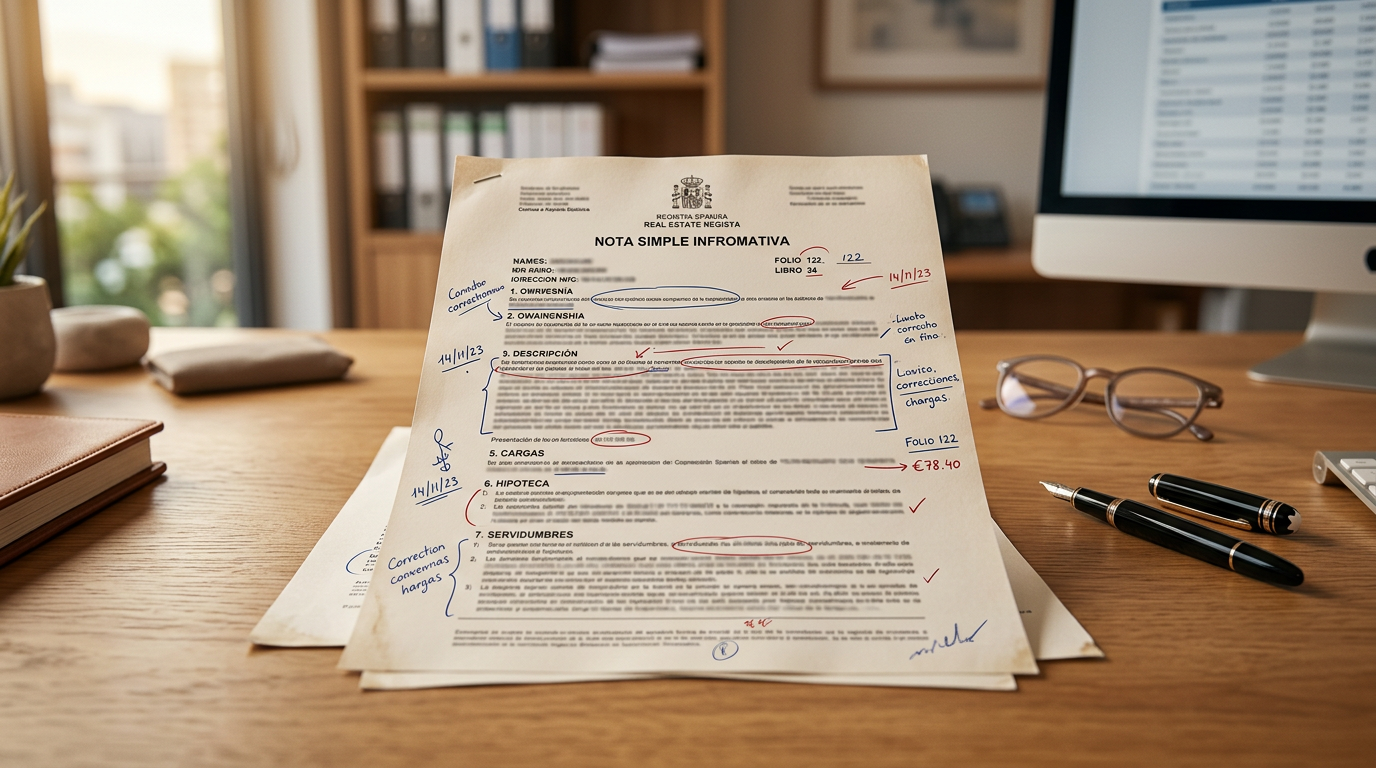
The first check consists of verifying who appears as the owner in the Property Registry (Registro de la Propiedad) and, very importantly, if that person can legally sell the property.
The nota simple (property registry extract) allows you to know the identification of the estate, its owners, and the registered charges or liens. It must be updated and compared with the documentation provided by the seller.
This review is crucial when:
- There are several owners.
- The property comes from an inheritance.
- There is a right of usufruct (usufructo).
- Any of the owners is represented by a power of attorney.
- The property belongs to a company.
- There are family circumstances that may affect the sale.
If the intervention of one of the owners is missing or the power of attorney used is insufficient, the sale can be delayed or blocked, generating significant problems.
2. Check the property charges (cargas)
A home can be sold with a pending mortgage, but the contract must clearly establish how and when it will be cancelled. But beyond the mortgage, there may be liens (embargos), resolutory conditions, usufructs, easements, prohibitions to dispose of the property, or tax liabilities (afecciones fiscales). It is vital to check the charges of a home.
It is not enough to identify a charge. One must analyze:
- If it remains in effect.
- What consequences it has for you as a buyer.
- Who must cancel it and how.
- What documentation will be necessary.
- If part of the sale price should be withheld.
A mortgage, for example, may be economically paid off but still registered in the Property Registry. In that case, it will also be necessary to process its registry cancellation.
The earnest money contract (contrato de arras) should indicate which charges the seller must cancel, when the cancellation will occur, and whether this will take place before or simultaneously with the signing of the public deed (escritura pública). The existence of a charge does not always force the buyer to discard the purchase, but it does require understanding it and correctly regulating its cancellation.
3. Compare the Registry, Catastro, and physical reality
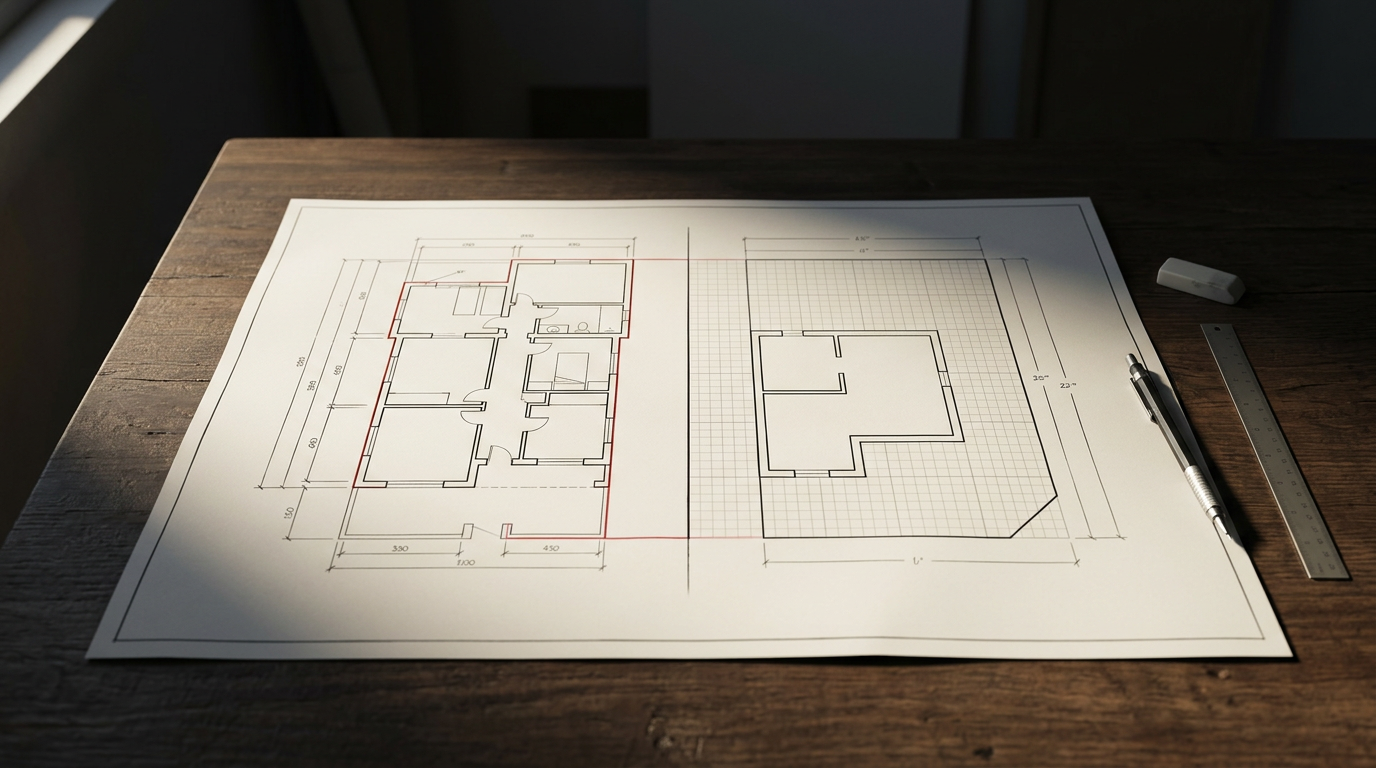
The home you visit must match the property described in the Property Registry and the information that appears in the Catastro (Land Registry).
It is advisable to compare:
- The registry area versus the cadastral area.
- The actual distribution and use of the property.
- The cadastral reference (referencia catastral).
- The included annexes (garage, storage room).
- Terraces, patios, or gardens, if any.
Differences in surface area do not always imply a problem, as they may respond to different measurement criteria. However, a relevant discrepancy may reveal an extension, an enclosure, or the incorporation of a common area that has not been regularized.
It is also essential to check that the property legally has residential use. The fact that a person lives there or that the advertisement presents it as an apartment does not prove by itself that it is a dwelling from a registry and urban planning perspective. The property could be recorded as an office, studio, warehouse, or commercial unit. If you want to know more about this, we recommend the article on differences between Registry and Catastro.
This circumstance can affect financing, appraisal, the occupancy certificate (cédula de habitabilidad), utilities, future works, and the subsequent sale of the property.
4. Review the urban planning situation and the occupancy certificate
The Property Registry does not always reflect all possible urban planning incidents. Therefore, depending on the characteristics of the property, it may be necessary to check:
- The applicable urban planning (planeamiento urbanístico).
- The permitted uses in the area.
- Licenses granted for works or activities.
- The legality of the works carried out in the home.
- The existence of administrative proceedings.
- Possible urban planning affectations that limit it.
- The architectural protection of the building.
This review is particularly important for penthouses, ground floors with a patio, houses, renovated homes, enclosed terraces, or properties resulting from a change of use. An extension may increase the apparent value of the home, but also generate problems if it was not authorized; its subsequent regularization can be costly or impossible.
In Catalonia, the cédula de habitabilidad (occupancy certificate) is the administrative document that certifies that a property is fit to be used as a residence and meets the habitability conditions required by regulations.
Before buying, it must be verified that:
- The certificate is valid.
- It corresponds exactly to the property.
- The data is consistent with its physical reality.
- There are no known obstacles to its renewal.
It should not be accepted simply that the certificate "has been requested" or "will be obtained later". If obtaining it is necessary to complete the operation, the contract must regulate what happens if it is not achieved within the agreed period.
5. Analyze the ITE and the building's state
When buying an apartment, you do not only acquire the interior of the home. You also acquire a share in the facade, the roof, the structure, the elevator, and the rest of the common elements.
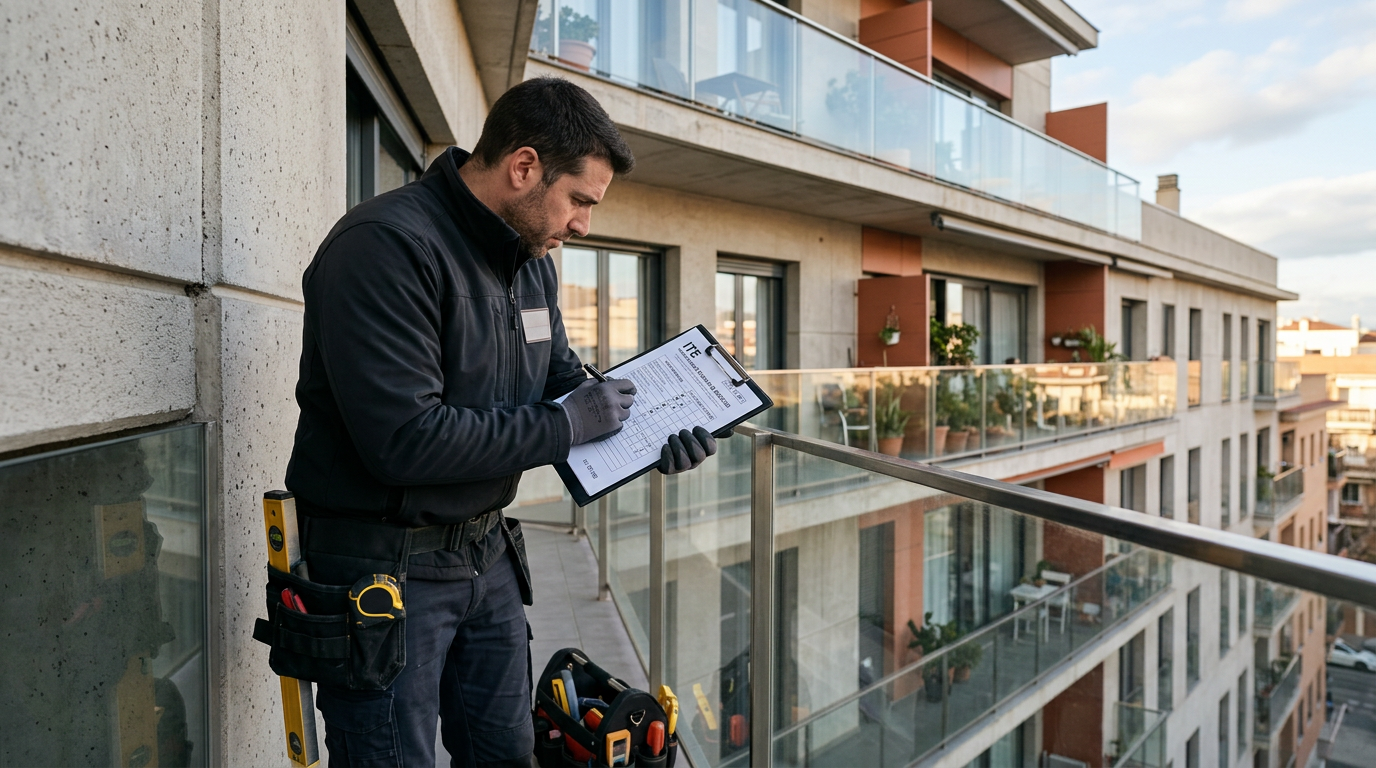
In Catalonia, certain buildings must undergo the Technical Building Inspection, known as ITE. In property transfers, the building's aptitude certificate must be delivered and, when the building is required to undergo the inspection, a copy of the technical inspection report. You can review the building's ITE in the official registry.
It is not enough to ask if "the ITE has been passed". You must review:
- The result of the inspection and its date.
- The validity of the aptitude certificate.
- The detected deficiencies.
- Their level of severity.
- The recommended corrective measures.
- The works executed and the actions still pending.
A building may have an aptitude certificate and, at the same time, need significant repairs that later translate into unplanned extraordinary assessments (derramas).
6. Review the homeowners' association
The certificate stating that the seller is up to date with payments is important, but it does not provide a complete view of the association's situation (comunidad de propietarios) on its own.
It is also advisable to review:
- The latest community minutes (actas).
- The approved annual accounts and the budget.
- Existing and planned special assessments (derramas).
- Planned or ongoing works.
- Possible legal proceedings in which the community participates.
- The community statutes and internal rules.
The minutes can reveal problems related to the facade, the roof, the elevator, dampness, delinquency, or the use of terraces and patios. It is important to ask not only about the assessments that have already been approved but also about the works being studied that could be voted on soon.
If the buyer plans to rent out the home, carry out works, install outdoor equipment, or develop a professional activity, the statutes and community rules should also be reviewed, as they may establish significant limitations.
7. Confirm that the home will be delivered free of occupants
It must be checked who is currently occupying the home and under what title. If it is rented, the lease agreement (contrato de arrendamiento) must be analyzed, including its duration, rent, extensions, and possible rights of the tenant. The sale of the home does not necessarily mean that the rental contract ends.
If the buyer wishes to receive it empty, the contract must expressly state that it will be delivered free of tenants, occupants, and belongings not included in the sale.
It is also recommended to visit the property immediately before signing the deed to verify:
- That it is unoccupied.
- That it maintains the agreed condition.
- That elements included in the purchase have not been removed.
- That all keys will be delivered.
- That no new damages or defects have appeared.
8. Review the documentation before signing arras
One of the most frequent errors is handing over money to reserve a home before having reviewed the essential documentation. A reservation or an earnest money contract (contrato de arras) can generate significant obligations and lead to the loss of the amount paid if the buyer does not proceed with the transaction.
Before signing, the following should be clear:
- The final sale price.
- The amount paid and its purpose.
- The deadline for signing the public deed (escritura pública).
- The charges (cargas) that will be cancelled before or at the time of signing.
- Documentation pending delivery or review.
- The occupancy status of the home.
- Items included in the sale price.
- Consequences of breach by either party.
- Conditions relating to financing, if any.
If the purchase depends on obtaining a mortgage, the financing clause must be drafted with precision. It is advisable to indicate the minimum amount needed, the deadline to obtain it, and the way to prove an eventual denial. A generic reference stating that the purchase is conditional on getting a mortgage may not offer sufficient protection.
What documentation should you request before buying?
Before committing to the purchase, it is advisable to have, at at least, the following documentation:
- Updated nota simple from the Property Registry.
- Ownership deed (escritura) of the seller.
- Catastral information.
- Latest IBI receipt.
- Valid occupancy certificate (cédula de habitabilidad), if applicable.
- Energy efficiency certificate.
- Certificate of zero debt with the community.
- Latest community minutes and budgets.
- Detailed information on present and future special assessments (derramas).
- ITE and aptitude certificate, when applicable.
- Documentation relating to charges (e.g., mortgage zero debt certificate).
- Lease agreement, if the home is rented.
- Complete draft of the reservation or earnest money (arras) contract.
The specific documentation will depend on the age, location, typology, and legal situation of each property. Do not hesitate to request all necessary information.
What does a real estate due diligence provide?
The main risk when buying a home is usually not found in an isolated document, but in the relationship between all of them. A different surface area may be linked to work without a license; a special assessment, to deficiencies detected in the ITE; and the lack of a certificate, to a change of use that has not been regularized.
A real estate due diligence allows for the interpretation of the documentation and determines:
- If the home can be bought with legal security.
- What risks must be solved before signing.
- What specific conditions should be included in the arras contract.
- If it is advisable to renegotiate any condition regarding price or deadlines.
- If there is any relevant reason not to proceed with the operation.
It is not just about collecting documents, but about understanding what implications each one has for your purchase and ensuring an acquisition without surprises. It is a fundamental step for a legal review of a home.
Frequently Asked Questions
Is it enough to request a nota simple?
No. The nota simple is essential for knowing the ownership and registered charges, but it does not allow for the detection of all possible urban, community, technical, or occupancy issues on its own. It is only a start.
What happens if the Registry and Catastro do not match?
The origin of the discrepancy must be analyzed. It may respond to different measurement criteria, but also to extensions, enclosures, or works that have not been regularized, which could indeed be a problem.
Can I sign arras before receiving all the documentation?
It is possible, but it entails a considerable risk. The most prudent approach is to previously review the essential information or include conditions that allow for the recovery of the amounts paid if relevant issues appear that were not known.
Who must pay a community special assessment (derrama)?
It will depend on when it was approved, when it is due, and what was expressly agreed between the buyer and seller in the contract. To avoid conflicts, this matter should be regulated in writing.
Conclusion
Knowing what to check before buying a home allows you to detect problems when it is still possible to negotiate, demand a solution, or withdraw from the operation without major losses. The review should be carried out before signing any reservation or arras contract and should not be limited solely to requesting a nota simple.
Ownership, charges, Catastro, urban planning, occupancy certificate, ITE, homeowners' association, and the contract must be analyzed together and by an expert.
At INMODOCS we review the legal and documentary situation of the property before you assume economic commitments. We identify the risks of the operation and tell you what should be corrected, negotiated, or incorporated into the contract. Know the risks and buy with peace of mind.
Before signing the deposit
If you are considering buying in Barcelona, read the full guide: Buying a flat in Barcelona without surprises.