

Receiving the keys to a new-build property is one of the most anticipated moments for any buyer. However, it is not always synonymous with the construction being completely finished or free of defects.
Doors that do not close properly, scratched or lifted flooring, unexpected dampness, household appliances that do not match those contracted, or problems with the air conditioning system are common issues during the first courtesy visit. In view of this, it is common for the developer to try to calm things down by promising a quick lista de repasos (snagging list) after signing the deed.
However, not all defects have the same legal significance or are governed by the same timeframes. To protect your investment, it is essential to perform a rigorous due diligence inmobiliaria, know your rights, and know how to formally claim defects in a new-build property.
What is considered a defect in a new-build property?
A defect or vicio constructivo (construction defect) exists when the property does not present the characteristics agreed upon in the contract or when any of its components has not been designed, installed, or executed following the rules of good construction.
These faults can be classified into visible defects (detectable at first glance upon delivery) or vicios ocultos (hidden defects - damages that manifest with the daily use of the property). The most common problems are usually:
- Aesthetic and finishes: Scratches on the parquet, chipped tiles, paint flaws, or poorly fitted moldings.
- Habitability and functionality: Water leaks, dampness, lack of acoustic or thermal insulation, and failures in the downspouts or electrical installation.
- Structural: Cracks in beams or load-bearing walls, ground settlement, and severe pathologies that compromise the stability of the building.
It is important to remember that the buyer has the right to demand everything that appears in the advertising, plans, and in the memoria de calidades (specifications document), as this documentation is binding for the developer.
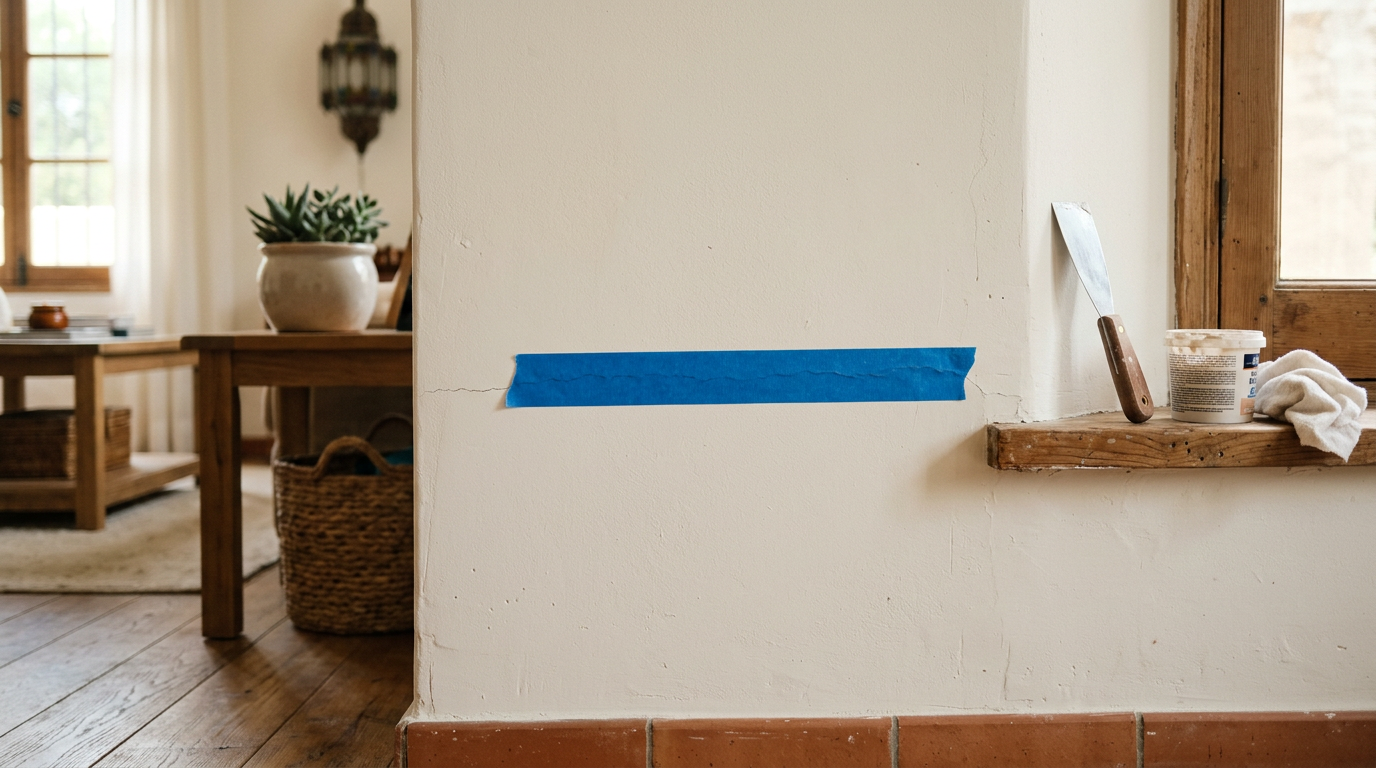
The three warranty periods of the Ley de Ordenación de la Edificación (LOE)
The Ley de Ordenación de la Edificación (LOE) regulates the warranty periods demandable from the agents involved in the construction. Depending on the severity and type of new-build defects, this legal text differentiates three specific periods:
1. One-year period: Defects in completion or finishing
This period covers material damages that exclusively affect the completion or finishing elements of the property. These are minor defects that are easily visible:
- Chipped paint or scuff marks.
- Misalignments in interior carpentry (doors that rub, poorly sealed windows).
- Loose doorknobs, poorly seated toilets, or detached skirting boards.
2. Three-year period: Defects in habitability and functionality
For three years, the construction agents are liable for defects that prevent normal, safe, and comfortable use of the home due to non-compliance with habitability requirements:
- Dampness and leaks from terraces or facades.
- Malfunction of plumbing, gas, or electrical installations.
- Deficient insulation against noise or outdoor temperatures (lack of thermal and acoustic comfort).
3. Ten-year period: Structural defects
The ten-year period, usually covered by the well-known seguro decenal, guarantees the repair of the most serious material damages: those affecting the foundation, supports, beams, slabs, or load-bearing walls, and which directly compromise the stability and mechanical resistance of the building.
| Type of Defect | Affected Elements | Warranty Period (LOE) |
|---|---|---|
| Finishing | Paint, aesthetic claddings, light carpentry | 1 year |
| Habitability | Installations, dampness, insulation failures, air conditioning | 3 years |
| Structural | Beams, foundation, slabs, load-bearing walls | 10 years |

When does the warranty period actually start to run?
A widespread mistake is to think that the 1, 3, and 10-year warranty periods begin to run on the day we buy the house before a notary or when the keys are handed over to us.
The legal reality is different: the calculation starts from the date of the acta de recepción de obra by the developer, when the builder formally hands over the finished building. Since this milestone may have occurred several months before you sign the deed for your home, it is crucial to request copies of the acta de recepción de obra and the Libro del Edificio from the seller to precisely verify the remaining coverage time available to you.
Essential difference: Warranty period vs. Limitation period to sue
We must not confuse the warranty period with the limitation period (plazo de prescripción) for claiming in court.
- The warranty period (1, 3, or 10 years) is the time within which the damage must manifest in the property.
- Once the defect appears within the applicable warranty period, the buyer has a limitation period of two years to exercise official actions and sue.
This means that if you detect a habitability dampness issue (3-year coverage) two years after reception, you have two additional years from that moment to claim judicially if it is not resolved.
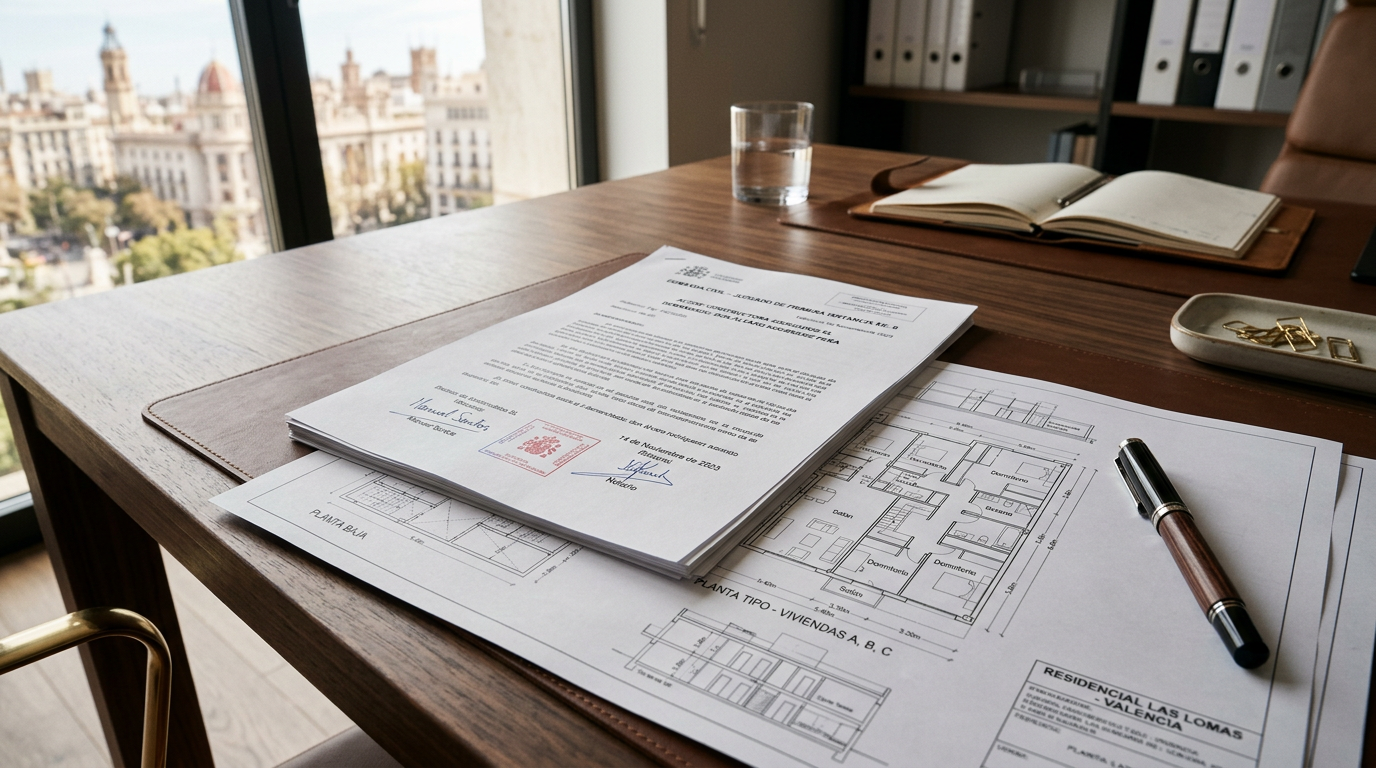
Lack of conformity in the purchase and sale agreement
In addition to the physical warranties of the LOE, in regional areas such as Catalonia, the regime for lack of conformity of the sale (falta de conformidad de la compraventa) provided in the Código Civil de Cataluña applies complementarily.
This scenario protects the buyer when what is received does not correspond to what was contractually agreed:
- The usable area of the property is less than that reflected in the official plans.
- The interior layout has been altered without the buyer's consent.
- Materials of lower quality than those expressly indicated in the contract have been used.
This avenue protects for three years from the delivery of possession of the property, providing the buyer with tools such as demanding repair, a proportional reduction of the sale price, or even contract termination in cases of extreme severity.
Whom should we claim the rectification from?
Even if the defect was directly caused by a worker hired by the construction company or is due to a calculation error by the architect, the buyer should preferably direct their claim against the developer (promotora).
The Ley de Ordenación de la Edificación clearly establishes that the developer will be jointly and severally liable along with the other agents involved to the buyers for material damages caused by construction defects. Therefore, channeling the claim to the developer gives you the greatest guarantee of legal protection, preventing the various technicians from blaming each other to evade responsibility.
How to act during the handover visit: The snagging list and minutes
Before signing the public deed, the developer will summon you to the property to carry out the corresponding courtesy pre-visit. Do not consider it a mere formality. Take the necessary time and follow these essential steps:
- Take the specifications document (memoria de calidades) and layout plans with you. Check that the finishes match exactly what was agreed.
- Verify all operational installations. Open all taps simultaneously to measure pressure, make sure all drains flow correctly, turn on the heating or air conditioning, raise and lower all electric blinds, and test all sockets using a charger.
- Draft a detailed snagging list (lista de repasos). Avoid generalities like "wall in bad condition". Instead, be specific: "15 cm long crack on the north wall of the master bedroom, one meter from the floor".
- Accompany each note with graphic material. Take close-up and medium-distance photographs and include a visual scale reference if necessary.
Always keep a copy signed or stamped by the developer proving that they have formally received said list of defects.
Should I sign the deed if new-build defects are detected?
The decision to move forward with the signature before a notary will depend directly on the nature and impact of the identified faults:
- If they are aesthetic defects or finishing touch-ups: It is not advisable to halt the signing of the sale. However, you must demand that the snagging list (lista de repasos) be annexed to the public deed itself with an express commitment by the developer to rectify them within a closed maximum period (usually between 15 and 30 days).
- If they are essential defects (preventing habitability or obtaining licenses): If the property lacks utilities, has serious sanitation or structural problems, we recommend seeking legal advice to suspend the signing of the deed or retain a percentage of the payment through a notary deposit until the repairs are completed.
Before taking any step of this caliber, it is useful to gather the documentation before signing and consult with real estate experts to avoid incurring a breach of contract on your part.
What to do if the developer does not repair the defects voluntarily
If, after constant emails and calls, the developer ignores the promised repairs or applies temporary patches that do not solve the underlying cause, you must initiate a formal claim through extrajudicial channels:
- Sending a Burofax with acknowledgment of receipt and text certification. Require the developer to immediately rectify the detailed defects within an unextendable maximum period (for example, 10 or 15 business days). The burofax has crucial evidentiary value if you decide to initiate subsequent proceedings.
- Preparation of an expert construction report. If the problem is of some severity, consult an independent architect or surveyor. This professional will draft a technical report determining the exact cause of the construction pathology, the ideal solution to repair it, and a valued economic budget of the repair costs.
- Consumer Protection or Housing Offices. You can file a complaint with the regional consumer administration to attempt a mediation process.
- Lawsuit. If the amicable route fails completely, the expert report will serve as the fundamental pillar of the civil lawsuit aimed at demanding the execution of the works or equivalent financial compensation.
If you are about to take the step or have just received the keys to your property, do not risk your money. Make sure beforehand with experts by performing complete checks when buying a new build to enter your new home with total peace of mind.
Frequently asked questions about defects in new builds
What happens if I repair the defects on my own and then send the invoice to the developer?
It is not recommended to act unilaterally except in cases of absolute urgency (an imminent flood, for example). To be able to legally claim the amount, you must have first formally required the developer, offering them a reasonable period for repair, and have an expert report justifying the objective necessity of the intervention carried out.
Can the community of property owners claim defects in the building?
Yes. If the construction faults are located in common areas (lobbies, facades, waterproofing of rooftops, community pools, or garages), the president of the community of owners (comunidad de propietarios), following an agreement approved by the board of owners, is the one who holds the appropriate legal representation to file the unified claim against the construction developer.
Does the seguro decenal cover defects in paint or laminate flooring?
Definitely not. The seguro decenal is a material damage insurance mandatory by law, focused exclusively on guaranteeing the structural stability of the property for a period of ten years. Aesthetic and paint defects are governed solely under the one-year warranty assigned to the builder.
Before signing arras
If you are considering a purchase in Barcelona, review the complete guide: Buying a flat in Barcelona without surprises.
Conclusion
Acquiring a flat or villa requires a major financial outlay. Do not tolerate false verbal promises letting your legal deadlines expire to claim the defects that, legitimately, you are entitled to have resolved.
Having the snagging list (lista de repasos) methodologically organized, documenting anomalies with independent expert reports, and formally notifying each alteration within the marked calendar will protect your assets in the long term.
At INMODOCS, we advise you to defend your rights as a buyer. We analyze the contract conditions, the existing warranty policies, and draft the necessary extrajudicial claims against the negligent developer so that you can enjoy your new-build home exactly as you dreamed it.