

Before purchasing a property, it is customary to request the nota simple (land registry extract) from the Registro de la Propiedad (Property Registry), ask for the certificate of being up to date with community fees, and even review the technical condition of the building. However, there is a crucial document that most buyers overlook until it is too late: the minutes of the homeowners' association meetings.
This written history of the community is the real "logbook" of the building. It records coexistence issues, necessary renovations, financial disputes, and legal litigation that will directly affect your pocket and your quality of life. Carrying out a thorough property due diligence before committing your money is the only way to guarantee a secure transaction.
In this article, we explain in detail what you should look for in the community minutes before buying a flat and why this simple step can save you thousands of euros in unexpected special assessments (derramas).
What are the minutes of the homeowners' association?
The homeowners' association of a building under the horizontal property regime is obliged to meet on an ordinary basis, at least once a year, to approve the budgets, accounts, and renew administration positions. Likewise, extraordinary meetings can be called when urgent matters or matters of community interest arise, in accordance with applicable national and regional legislation, such as the Código Civil de Cataluña (Civil Code of Catalonia) in its regulation of horizontal property.
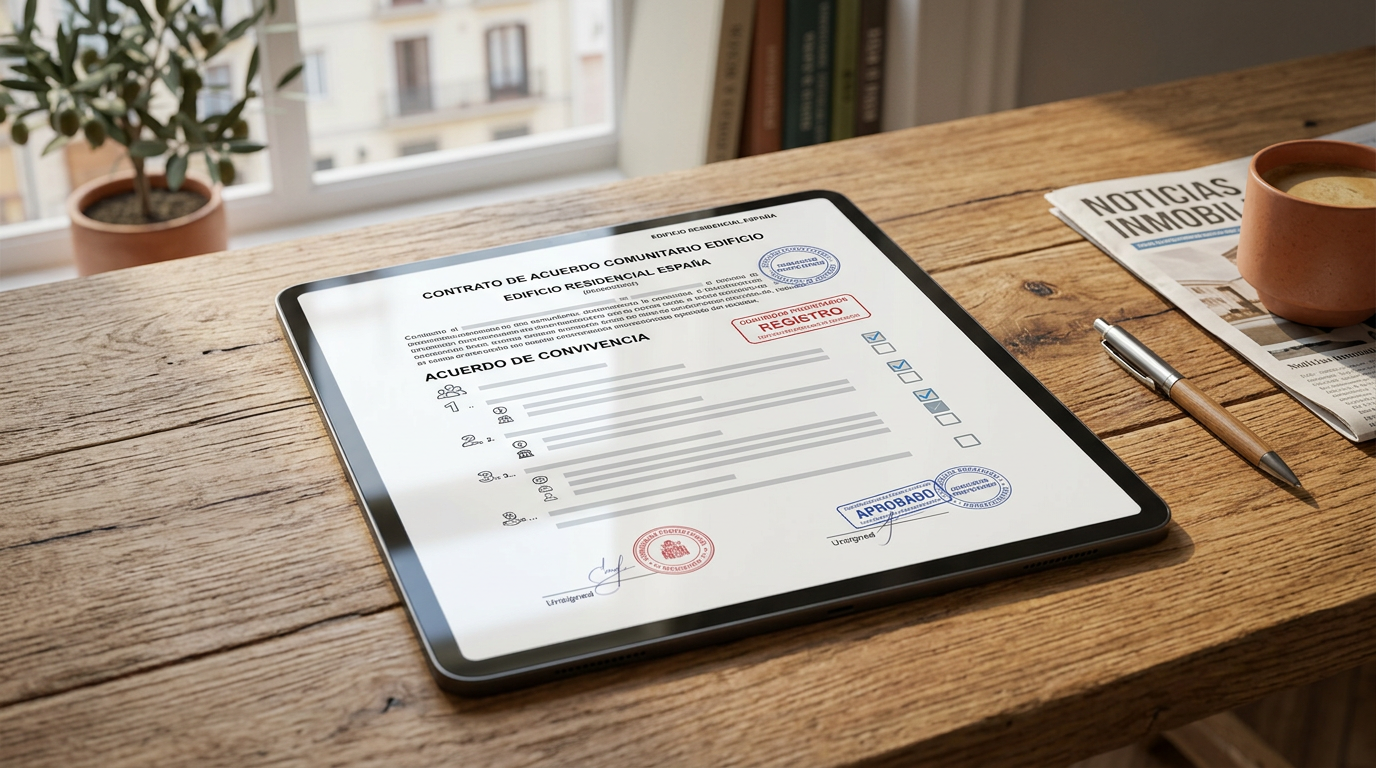
Each of the points debated and the resolutions approved in these meetings must be transcribed into the Libro de Actas (Minutes Book) of the co-ownership, which is kept by the property manager or secretary. This book has indisputable legal validity, and the resolutions reflected in it bind all owners of the property, whether present or absent.
How many years of minutes is it advisable to request before buying?
Although there is no strict legal standard, the professional recommendation in the real estate sector is to request and examine the minutes of the last three years.
In buildings of a certain age (more than 30 or 40 years old), or when the general condition of the common areas raises doubts, it is highly advisable to extend this review to the previous five years. The reason is simple: many large-scale projects (such as installing a ground-level elevator or the complete renovation of a facade) go through very long periods of deliberation, requesting quotes, and obtaining municipal licenses before being finally approved and voted on at a meeting.
The 10 critical points you must review in the minutes
When analyzing the content of the minutes of the homeowners' association, you should not limit yourself to a superficial reading. You must act like a true auditor, looking for signs of future expenses or structural obligations. Pay close attention to these ten aspects:
1. Works and assessments under study
It is common for communities to debate an expensive repair long before formally approving it. Look for expressions such as “three quotes will be requested to repair the downspouts”, “pending technical study for the roof” or “the vote on the facade is postponed until the next extraordinary meeting”. Even if there is no approved assessment at that moment, the future expense is an imminent reality that you will have to assume after the purchase.
2. Already approved assessments pending payment
If a special assessment (derrama) has already been approved to pay for work on the building, it is essential to clarify the financial distribution before going to the notary. Knowing in detail who must pay a special assessment depending on the timing of its approval and accrual will allow you to negotiate a direct reduction on the sale price or demand that the seller settle the entire cost before signing.
3. Structural defects, roofs, and problems with the ITE
The Inspección Técnica de Edificios (ITE, Building Technical Inspection) is mandatory for buildings of a certain age. You should review the minutes to check the building's ITE and verify if serious or very serious deficiencies have been detected. Mentions of falling debris, cracks in load-bearing walls, persistent dampness in the basement, or waterproofing problems on the roof terrace are usually the prelude to high-cost rehabilitation projects.
4. Installation or replacement of the lift
The installation of an elevator for the first time or the complete replacement of obsolete machinery to adapt it to current accessibility regulations represents one of the highest community assessments an owner can face. Check if this issue has been discussed in recent meetings or if there are municipal accessibility requirements.
5. Delinquency and financial health of the building
The minutes usually break down in detail the list of defaulting owners and the amounts they owe to the community. In addition to checking community debts, it is vital to observe the overall delinquency rate. A building with a high rate of unpaid fees will have serious difficulties undertaking urgent repairs, dealing with incidents, or even covering ordinary maintenance costs and basic services.
6. Ongoing litigation and legal claims
Look for keywords such as “lawsuit”, “order for payment procedure” (procedimiento monitorio), “lawyer”, or “challenging of resolutions”. The homeowners' association may be involved in expensive lawsuits against the developer for construction defects, against service providers, or against neighboring residents. This litigation involves paying professional defense fees and potential future compensation.
7. Issues with recurring dampness or leaks
Pay special attention if you are buying a top-floor apartment (penthouse) or a ground floor. The minutes usually reflect continuous complaints from neighbors regarding leaks from communal terraces for private use or rising dampness. If the problem has a communal origin, the resolution can take years to be resolved in meetings.
8. Unauthorized facade modifications
If the apartment you wish to purchase has an enclosed terrace, air conditioning installed on the main facade, or a modified window, check the minutes to see if these alterations have the proper authorization from the homeowners' association (junta de propietarios). Otherwise, the community could legally demand the reversion of the works to their original state.
9. Limitation of activities and tourist apartments
Many homeowners' associations are approving, by qualified majorities, the express prohibition of the tourist use of properties within the building. If you are buying the apartment as an investment for short-term rental, checking the bylaws and the minutes of previous meetings is an essential step to avoid seeing your activity frustrated from day one.
10. Annual budget and the mandatory reserve fund
Analyze whether the ordinary budget comfortably covers concierge services, cleaning, and utilities, or if the community is living on the edge of its financial resources. Likewise, check that the minimum legal allocation for the reserve fund intended for future contingencies and conservation works is being met.
Do the minutes of your future community hide financial risks? Before signing the earnest money agreement (arras), our legal team analyzes the association's minutes, the ITE (Technical Building Inspection) and the financial status of the building in detail to ensure you a surprise-free purchase. Review community minutes with INMODOCS
Key concepts to look for in the meeting minutes
To facilitate your analysis, we provide a quick list of terms of special relevance that you should actively track in community documents:
- Derrama / Cuota extraordinaria (Special assessment / Extraordinary fee): Expenses outside of regular budgets.
- Fachada / Cubierta / Bajantes (Facade / Roof / Downspouts): Common elements whose repair is very costly.
- ITE / Deficiencias (ITE / Deficiencies): Results of official building inspections.
- Demanda / Monitorio / Litigio (Lawsuit / Payment order procedure / Litigation): Ongoing legal conflicts.
- Morosos / Deudores (Defaulters / Debtors): Owners who compromise the building's liquidity.
- Ascensor / Cota cero (Elevator / Ground-level access): Mandatory projects of high economic value.
Do the minutes replace the community debt certificate?
No, not at all. They are two documents with radically different and complementary purposes.
The community debt certificate (signed by the administrator and the president) certifies the exact financial situation of the seller at the time of property transfer. It certifies whether the apartment is up to date with the payment of already due ordinary and extraordinary expenses.
On the contrary, the minutes go further: they reveal spending intentions, latent debates, planned special assessments (derramas), and technical problems of the building that have not yet materialized into a liquid and enforceable debt for the current owner, but which will be so in the short or medium term for you as the new owner.
How to obtain the minutes before signing the earnest money agreement (arras)
Since the potential buyer is not yet part of the property, they have no legal right to request the minutes directly from the building's administrator. Therefore, the usual procedure is to request them from the seller or the real estate agency managing the sale.
The seller, as a co-owner, has the full right to request copies of the meeting minutes from the property manager or download them from the community's online portal if available.
Remember to gather all the documentation before signing the earnest money agreement. If you notice that the seller is reluctant, creates obstacles, or repeatedly refuses to provide the building's latest minutes, take it as a major red flag and halt the signing until it is cleared up what is being hidden in the history of the homeowners' association, as it is essential to know exactly what to check before buying a property.
Conclusion: Avoid surprises of thousands of euros
Acquiring a property is not limited to buying the interior walls of an apartment; it involves becoming a co-owner of an entire building and assuming a percentage of all its current and future charges, projects, and debts. A land registry certificate (nota simple) free of mortgage charges does not guarantee that at the next meeting a special assessment of 15,000 euros will not be approved to renovate the building's balconies.
Reviewing the minutes of the homeowners' association meeting with the proper professional advice is the most powerful preventive tool at your disposal to buy with absolute peace of mind and financial tranquility.

Before signing the deposit
If you are considering buying in Barcelona, read the full guide: Buying a flat in Barcelona without surprises.